
Shoulder pain is one of the most common musculoskeletal complaints seen in clinics today. Among the many causes, rotator cuff injuries stand out as a leading reason for pain, stiffness, and loss of shoulder function. Whether you are an athlete, a working professional, or a senior citizen, a rotator cuff problem can significantly affect daily life. If you are looking for expert-guided recovery, consulting a physiotherapist in Pune is one of the safest and most effective ways to restore shoulder strength and mobility. This detailed guide explains rotator cuff injuries, the importance of physiotherapy, and the top rotator cuff rehabilitation exercises recommended by physiotherapists in Pune for long-term relief and prevention.
Understanding the Rotator Cuff
The rotator cuff is a group of four muscles and their tendons that stabilize the shoulder joint and allow smooth arm movements.
The four rotator cuff muscles are:
- Supraspinatus – helps lift the arm
- Infraspinatus – assists in external rotation
- Teres Minor – supports rotation and stability
- Subscapularis – enables internal rotation
Injury to any of these muscles or tendons can cause pain, weakness, and reduced shoulder function.
Common Causes of Rotator Cuff Injuries
Physiotherapists frequently see rotator cuff problems caused by:
- Repetitive overhead activities (sports, gym, manual work)
- Poor posture and prolonged desk work
- Sudden trauma or falls
- Age-related degeneration
- Improper lifting techniques
- Muscle imbalance and shoulder instability
Early diagnosis and treatment by a top physiotherapist in Pune can prevent mild pain from progressing into chronic shoulder dysfunction.
Symptoms That Indicate a Rotator Cuff Problem
You should consult a rehabilitation specialist in Sinhagad Road Pune or nearby if you experience:
- Shoulder pain while lifting or reaching overhead
- Pain at night, especially while lying on one side
- Weakness in the arm
- Limited shoulder movement
- Clicking or catching sensations
Ignoring these signs can lead to stiffness, frozen shoulder, or even tendon tears.
Why Physiotherapy Is Essential for Rotator Cuff Rehabilitation
Physiotherapy is the gold standard for managing rotator cuff injuries without surgery in most cases. A skilled physiotherapist in Pune focuses on:
- Reducing pain and inflammation
- Restoring shoulder mobility
- Strengthening weak muscles
- Improving posture and biomechanics
- Preventing recurrence
Advanced Pain management physiotherapy Pune clinics also use modalities such as ultrasound, IFT, dry needling, and manual therapy to accelerate healing.
Phases of Rotator Cuff Rehabilitation
A structured rehab program designed at a Physiotherapy clinic near Sinhagad Road Pune typically follows these phases:
Phase 1: Pain Relief & Protection
- Activity modification
- Ice or heat therapy
- Gentle mobility exercises
Phase 2: Mobility Restoration
- Stretching tight muscles
- Improving joint range
Phase 3: Strengthening
- Rotator cuff and scapular muscle strengthening
Phase 4: Functional Training
- Sport- or work-specific movements
Top Rotator Cuff Rehabilitation Exercises by Physiotherapists in Pune
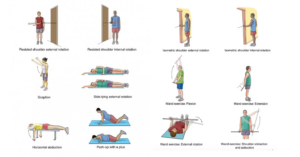
1. Pendulum Exercise
Purpose: Pain relief and gentle mobility
How to do it:
- Lean forward, support yourself with the unaffected arm
- Let the affected arm hang freely
- Gently swing it forward-backward, side-to-side, and in circles
Repetitions: 10–15 swings in each direction
Physio Tip: Ideal in early rehabilitation for pain reduction.
2. Isometric Shoulder Exercises
Purpose: Activates muscles without movement
How to do it:
- Press your hand gently against a wall without moving the shoulder
- Hold for 5 seconds
Repetitions: 10 times in each direction
Physio Tip: Safe for acute pain phases.
3. Wall Crawl (Finger Walk)
Purpose: Improves shoulder elevation
How to do it:
- Face a wall and walk your fingers upward
- Stop at pain-free range
- Slowly return
Repetitions: 10–12 times
Physio Tip: Great for regaining overhead motion.
4. Posterior Shoulder Stretch
Purpose: Reduces tightness
How to do it:
- Bring the affected arm across the body
- Gently pull with the other arm
Hold: 20–30 seconds
Repetitions: 3–4 times
Advanced Strengthening Exercises
5. External Rotation with Resistance Band
Purpose: Strengthens infraspinatus and teres minor
How to do it:
- Elbow at 90°, tucked to the side
- Rotate arm outward against band resistance
Repetitions: 12–15
Physio Tip: Maintain slow, controlled movement.
6. Internal Rotation with Resistance Band
Purpose: Strengthens subscapularis
How to do it:
- Pull the band toward your stomach
- Keep elbow close to the body
Repetitions: 12–15
7. Scapular Retraction
Purpose: Improves shoulder blade stability
How to do it:
- Pull shoulder blades together
- Hold for 5 seconds
Repetitions: 10–12
8. Shoulder Abduction (Pain-Free Range)
Purpose: Functional strength
How to do it:
- Lift arm sideways to shoulder height
- Use light weights if advised
Repetitions: 10–12
Posture Correction: A Key Element of Recovery
Many patients visiting a physiotherapy clinic near Sinhagad Road Pune suffer from rotator cuff pain due to poor posture. Rounded shoulders and forward head posture overload shoulder tendons.
Physiotherapists correct posture through:
- Ergonomic advice
- Scapular stabilization exercises
- Thoracic spine mobility
When to Avoid Exercises
Stop exercises and consult your physiotherapist in Pune if you notice:
- Sharp or worsening pain
- Swelling or redness
- Sudden loss of strength
Professional guidance ensures safe progression and prevents further injury.
Benefits of Choosing a Top Physiotherapist in Pune
Working with an experienced rehabilitation specialist in Sinhagad Road Pune offers:
- Personalized exercise programs
- Evidence-based pain management physiotherapy Pune
- Faster recovery timelines
- Reduced risk of surgery
- Long-term shoulder health
How Long Does Rotator Cuff Rehabilitation Take?
Recovery duration depends on:
- Severity of injury
- Age and lifestyle
- Consistency with physiotherapy
Mild cases may recover in 4–6 weeks, while chronic conditions may take 3–6 months under expert supervision from a top physiotherapist in Pune.
Preventing Future Rotator Cuff Injuries
Your physiotherapist may advise:
- Regular shoulder strengthening
- Proper warm-up before activities
- Avoiding sudden overload
- Maintaining posture
Prevention is always better than cure.
Conclusion
Rotator cuff injuries can be painful and limiting, but with the right guidance, recovery is highly achievable. Structured rehabilitation exercises supervised by a qualified physiotherapist in Pune play a crucial role in restoring shoulder function safely and effectively.
If you are experiencing shoulder pain, consulting a trusted physiotherapy clinic near Sinhagad Road Pune or a skilled rehabilitation specialist in Sinhagad Road Pune can help you regain confidence in movement and return to a pain-free life.